

↑
Cos’altro, cos’altro c’è nella città gioiosa? (What else, what else belongs in the joyous city?) — 2026
The film work draws inspiration from Ursula K. Le Guin’s short story ‘The Ones Who Walk Away from Omelas and is developed together with a group of adolescents and young adults from the MaTeMù community school in Rome’s Esquilino district. The story depicts an apparently perfect, happy, and prosperous city whose collective harmony depends on the extreme suffering and isolation of a single imprisoned child, kept alive in inhumane conditions. All citizens are made aware of this truth and knowingly accept the moral pact upon which their well-being rests. A few adolescents, unable to live with this knowledge, choose to leave the city without returning. The reader is given no information about where they are going or why.
This open ending became the starting point for a workshop in which participants were invited to grapple with questions of community, utopia, justice, privilege, and oppression: What truly makes a city happy? What is a utopia? Must someone be sacrificed for others to thrive? Why is it so difficult to imagine a place in which everyone—without exception, even those who cause harm—is free?
A distorting mirror of a reality already before us, the story speaks of abolitionist visions grounded in the belief that no one is expendable, and in the refusal of the comforting habit of inhabiting the world as it is without confronting it through uncomfortable questions. It speaks of critical utopias – visions of better worlds that reject crystallised and perfect models, embracing complexity, contradiction, and unforeseen consequences along the way.
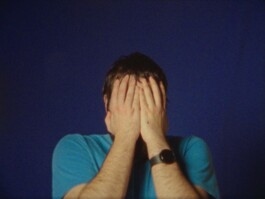
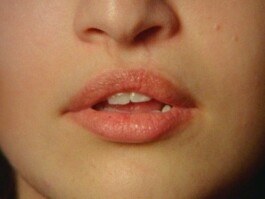
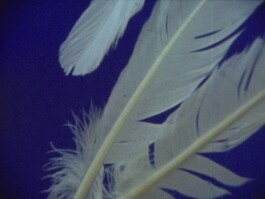
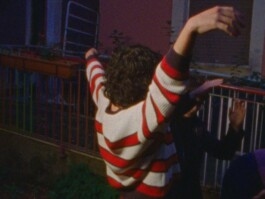
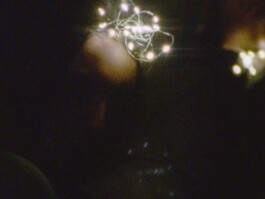
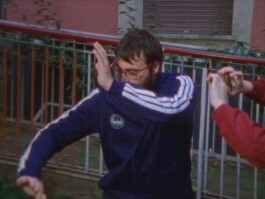
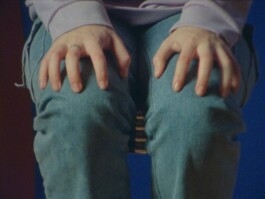
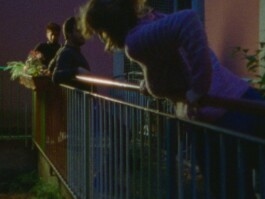
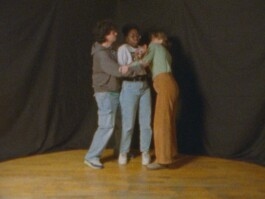
Conceived and conducted in collaboration with performer Sarah Silvagni and theatre educators Tamara Bartolini and Michele Baronio, the workshop approached Le Guin’s themes through shared readings, discussions, theatrical exercises, bodily improvisations, and writing practices. Over the course of a month, the process led to the creation of a collective Super 8 short film, shot directly by the participants, who handled the camera and shared directorial decisions, shaping scenes based on theatrical exercises, personal reflections, and texts written specifically for the audiovisual work. It is therefore also a work about points of view – about the eyes that see rather than what is seen. A work that seeks, on the one hand, to center the agency of young participants and, on the other, to question the power of the camera to impose narratives and hierarchies of meaning.
Filmed, written and voiced by the participants of the theatre course at the youth center and art school MaTeMù in Rome:
Carmen Ionica Avaloaiei, Stefania Baltazar, Giulia Bertozzi, Ginevra Chiarello, Nicole Colombara, Lino De Michelis, Matteo Di Giacinto, Jemma Domenicano, Filippo Charlie Galiani, Affan Ibna Nur, Elliot Ojalvo, Daniel Phillips, Chiara Piga, Omar Rojas Torres, Tommaso Ronchini, Federico Rossini, Flavio Sammarini, Valerio Sammarini, Cristo Spinella, Alvar Strelcova, Lycoris Vitali, Syntia Yemalin Vlavondou
Movement facilitator: Sarah Silvagni
Theatre educators: Tamara Bartolini, Michele Baronio (Bartolini/Baronio)
Theatre assistants: Valentina Di Odoardo, Arianna Assanelli
Collaboration with MaTeMù facilitated by Simona Macci
Shot on Super 8 film by the participants at MaTeMù
DOP: Michelangelo Maraviglia
Assistant director: Adele Dipasquale
Camera assistant: Maria Chiara Morolli
Sound recordist Carolina Stichter
Film equipment: Bottega Analogica, Blackandlight S.r.l.
Processing & telecine: Augustus Color S.r.l.
Editing: Benedetta Marchiori, Cristina Lavosi
Music & Sound design: Vittorio Giampietro with recordings by participants: Matteo Di Giacinto (guitar), Elliot Ojalvo (chime bells)
Color grading: Marco Minghi
Subtitles supervision: Hattie Wade
Realised in collaboration with MaTeMù, the youth center and art school of CIES Onlus (IT)
Commissioned and produced by Almanac, Torino (IT)
Supported by MiC and SIAE, as part of ‘Per Chi Crea’ programme
Co-funded by Mondriaan Fund and Stroom Den Haag (NL)
Research support by CASTRO, Roma (IT)
Special thanks to: ULIT—Un Limone In Tasca, Giusi Palomba, Valentino Russo, Pontedincontro, Lorenza Accardo


Cos’altro, cos’altro c’è nella città gioiosa? (What else, what else belongs in the joyous city?) — 2026
The film work draws inspiration from Ursula K. Le Guin’s short story ‘The Ones Who Walk Away from Omelas and is developed together with a group of adolescents and young adults from the MaTeMù community school in Rome’s Esquilino district. The story depicts an apparently perfect, happy, and prosperous city whose collective harmony depends on the extreme suffering and isolation of a single imprisoned child, kept alive in inhumane conditions. All citizens are made aware of this truth and knowingly accept the moral pact upon which their well-being rests. A few adolescents, unable to live with this knowledge, choose to leave the city without returning. The reader is given no information about where they are going or why.
This open ending became the starting point for a workshop in which participants were invited to grapple with questions of community, utopia, justice, privilege, and oppression: What truly makes a city happy? What is a utopia? Must someone be sacrificed for others to thrive? Why is it so difficult to imagine a place in which everyone—without exception, even those who cause harm—is free?
A distorting mirror of a reality already before us, the story speaks of abolitionist visions grounded in the belief that no one is expendable, and in the refusal of the comforting habit of inhabiting the world as it is without confronting it through uncomfortable questions. It speaks of critical utopias – visions of better worlds that reject crystallised and perfect models, embracing complexity, contradiction, and unforeseen consequences along the way.
Conceived and conducted in collaboration with performer Sarah Silvagni and theatre educators Tamara Bartolini and Michele Baronio, the workshop approached Le Guin’s themes through shared readings, discussions, theatrical exercises, bodily improvisations, and writing practices. Over the course of a month, the process led to the creation of a collective Super 8 short film, shot directly by the participants, who handled the camera and shared directorial decisions, shaping scenes based on theatrical exercises, personal reflections, and texts written specifically for the audiovisual work. It is therefore also a work about points of view – about the eyes that see rather than what is seen. A work that seeks, on the one hand, to center the agency of young participants and, on the other, to question the power of the camera to impose narratives and hierarchies of meaning.
Filmed, written and voiced by the participants of the theatre course at the youth center and art school MaTeMù in Rome:
Carmen Ionica Avaloaiei, Stefania Baltazar, Giulia Bertozzi, Ginevra Chiarello, Nicole Colombara, Lino De Michelis, Matteo Di Giacinto, Jemma Domenicano, Filippo Charlie Galiani, Affan Ibna Nur, Elliot Ojalvo, Daniel Phillips, Chiara Piga, Omar Rojas Torres, Tommaso Ronchini, Federico Rossini, Flavio Sammarini, Valerio Sammarini, Cristo Spinella, Alvar Strelcova, Lycoris Vitali, Syntia Yemalin Vlavondou
Movement facilitator: Sarah Silvagni
Theatre educators: Tamara Bartolini, Michele Baronio (Bartolini/Baronio)
Theatre assistants: Valentina Di Odoardo, Arianna Assanelli
Collaboration with MaTeMù facilitated by Simona Macci
Shot on Super 8 film by the participants at MaTeMù
DOP: Michelangelo Maraviglia
Assistant director: Adele Dipasquale
Camera assistant: Maria Chiara Morolli
Sound recordist Carolina Stichter
Film equipment: Bottega Analogica, Blackandlight S.r.l.
Processing & telecine: Augustus Color S.r.l.
Editing: Benedetta Marchiori, Cristina Lavosi
Music & Sound design: Vittorio Giampietro with recordings by participants: Matteo Di Giacinto (guitar), Elliot Ojalvo (chime bells)
Color grading: Marco Minghi
Subtitles supervision: Hattie Wade
Realised in collaboration with MaTeMù, the youth center and art school of CIES Onlus (IT)
Commissioned and produced by Almanac, Torino (IT)
Supported by MiC and SIAE, as part of ‘Per Chi Crea’ programme
Co-funded by Mondriaan Fund and Stroom Den Haag (NL)
Research support by CASTRO, Roma (IT)
Special thanks to: ULIT—Un Limone In Tasca, Giusi Palomba, Valentino Russo, Pontedincontro, Lorenza Accardo
↑